
14 May 2026
Industrial Paint Stripping: Comparing Methods to Choose the Most Effective Approach
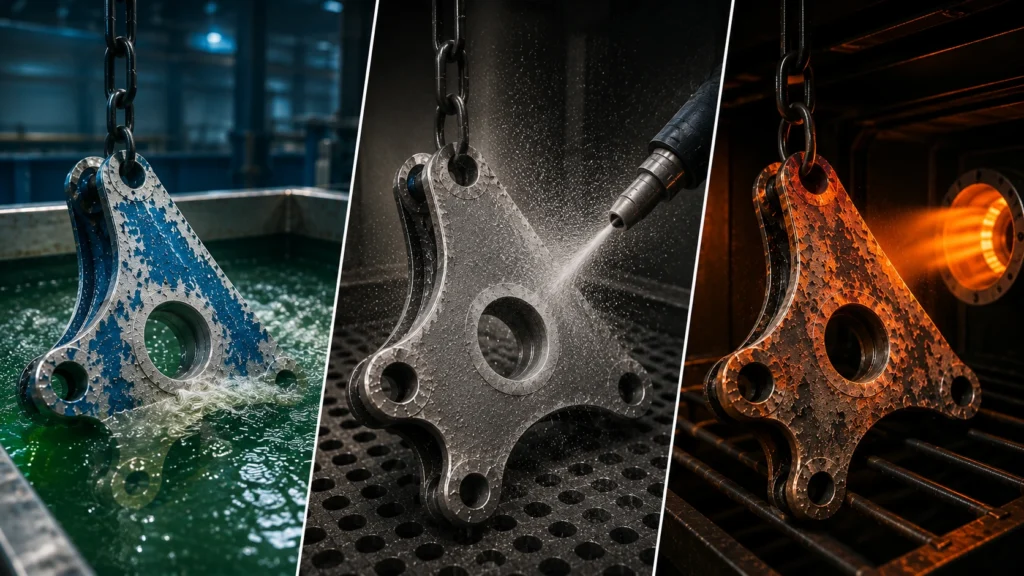
Industrial paint stripping from metal surfaces is a critical step in manufacturing processes. It’s not just about removing a coating, it’s about preserving the substrate, maintaining high quality standards, and ensuring operational continuity.
In the following sections, we break down the main industrial paint stripping methods, comparing how they work, where they perform best, and where they fall short. The goal is not to define a universally better solution, but to highlight the differences that directly impact surface quality, process control, and production efficiency.
Thermal Stripping: Throughput and Durability
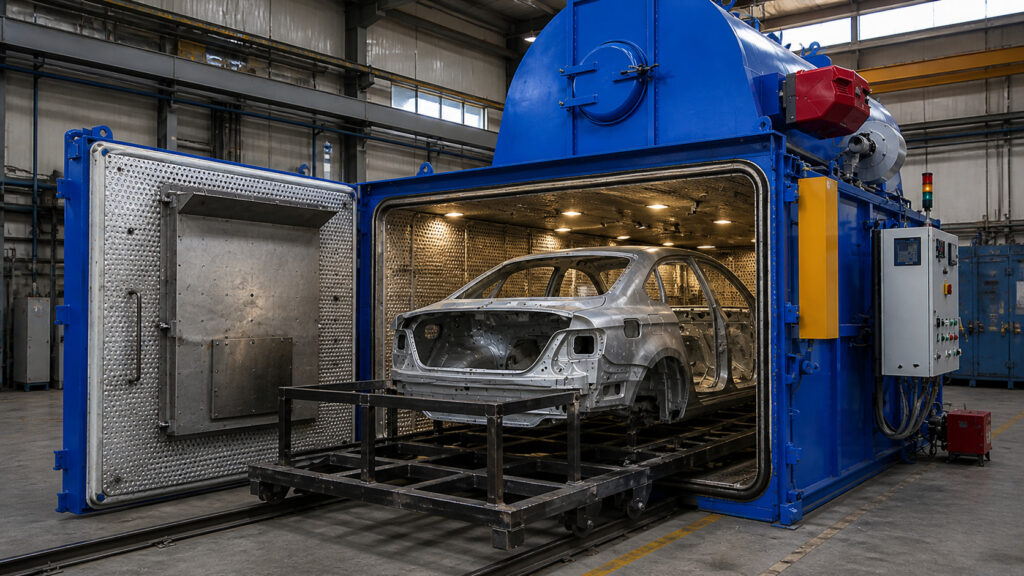
Thermal stripping relies on high temperatures to break down coatings. It’s an effective option when the priority is processing large volumes or removing highly resistant coatings, such as those found on hooks and steel structures used in production lines. The key factor to consider is that heat affects the entire component. This may not be an issue for robust materials, but it becomes critical when dealing with more sensitive alloys or tight tolerances. In short, it’s a technology built for throughput, but with less control over fine details.
Mechanical Stripping: Speed with Limited Precision
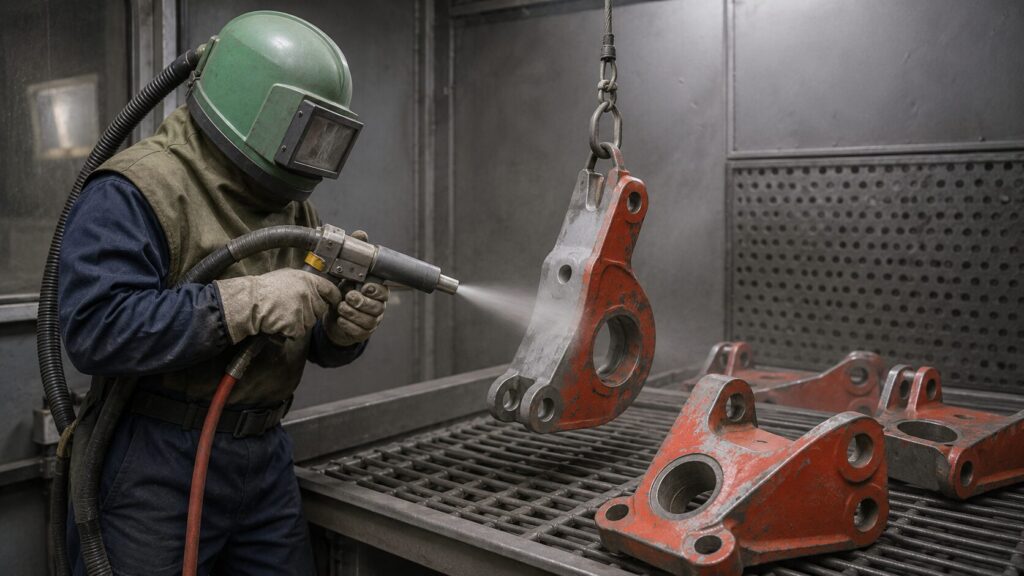
Mechanical stripping, including sandblasting or shot blasting, removes paint through physical abrasion. It’s fast, direct, and often used when operational speed is more important than surface finish. It performs well on simple geometries and durable materials. However, as complexity increases, so do the limitations. The abrasive action can alter the surface, making it less suitable for precision components or more delicate materials. It’s an effective solution in specific scenarios, but not the most versatile.
Advanced Technologies: High Precision, Niche Applications
Solutions such as laser stripping, cryogenic processes, or fluidized bed systems represent a more advanced evolution of the industry. They offer high levels of precision and control, but are typically used in very specific applications where volume or cost is secondary to result quality. These are not replacement technologies, but complementary ones.
Chemical Stripping: Balancing Performance and Material Integrity
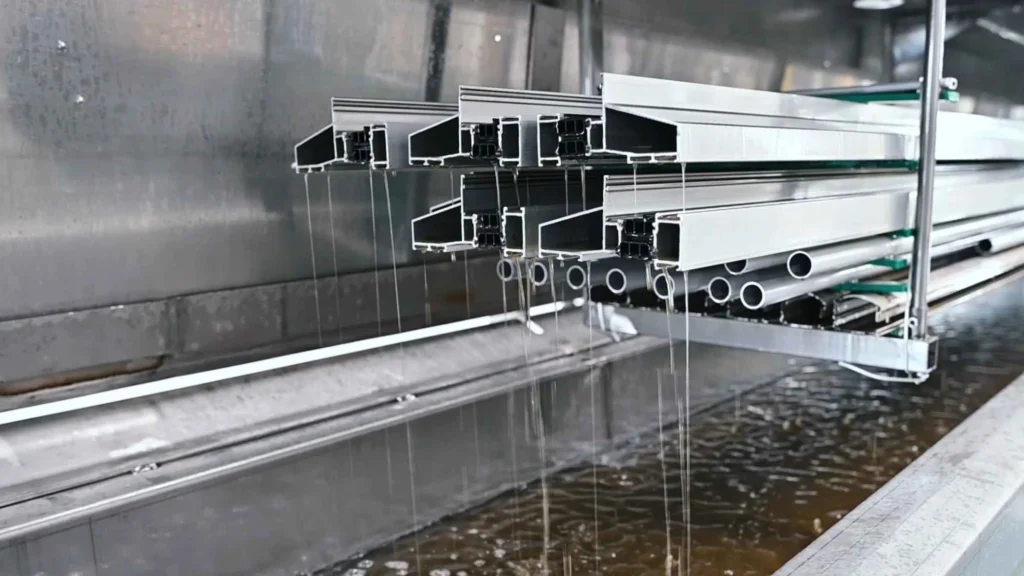
Industrial chemical stripping is based on a controlled principle: dissolving the coating without affecting the underlying substrate. This makes it particularly suitable for removing paint from metals such as aluminum, steel, and light alloys, especially when dealing with complex components or intricate geometries. The main advantage is not just cleanliness, but the quality of the final surface. With no abrasion or thermal stress involved, the metal retains its original properties. That doesn’t mean it’s the simplest option. It requires precise process management, parameter control, and the right chemical formulation. But when these elements are properly handled, the level of precision is difficult to match with other technologies.
The Real Comparison: Where the Differences Lie
Comparing metal stripping techniques isn’t about ranking them. What really changes is the impact on the overall production process. Some methods prioritize speed, others ease of operation. Others aim for a broader balance between surface quality, material preservation, and process repeatability. And in many industrial environments, that balance is what makes the difference over time.
A Decision Beyond Technology
Choosing a stripping method should never happen in isolation. Metal type, coating characteristics, component geometry, and production goals all directly affect the outcome. But there’s another often overlooked factor: process stability over time. Not all technologies provide the same level of control and consistency. And at scale, that difference becomes tangible.
Conclusion
Talking about the “best” stripping method is misleading. It’s more accurate to talk about the most suitable one. Each technology has its place. Some are built for speed, others for simplicity, others for precision. The real differentiator is the level of control you need over the final result. And in most industrial contexts, that control is what ultimately defines quality, efficiency, and production continuity.

