
25 March 2026
Metal Paint Stripping: How to Remove Paint from Metal Surfaces
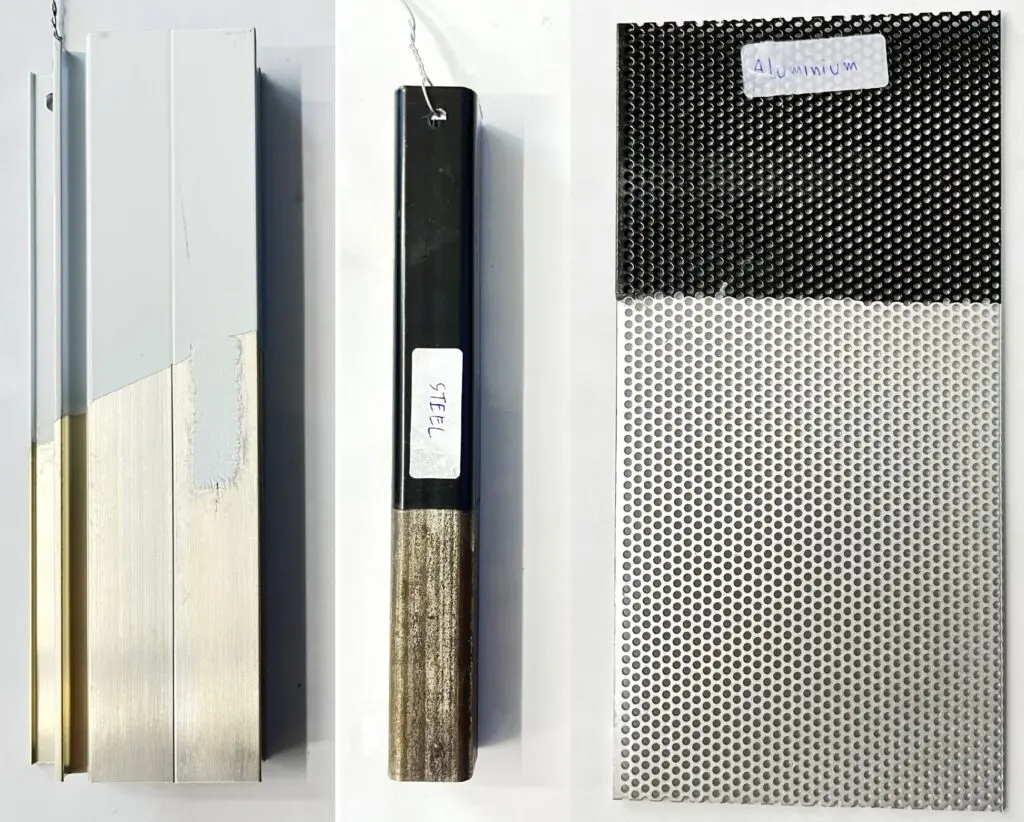
Understanding how to remove paint from metal surfaces is very different from working on wood or concrete. Metal is not porous, and paint adheres through strong chemical and mechanical bonds. In industrial environments, coating systems are designed to resist impact, chemicals, weathering, and thermal stress. For this reason, metal paint stripping requires a precise technical approach.
Metal paint removal is not just an aesthetic operation. It is used to restore components, recover production equipment, prepare surfaces for new treatments, or eliminate coating buildup that compromises tolerances and functionality. When we talk about metal stripping, we are talking about process efficiency.
The main methods used to remove paint from metal surfaces are chemical, mechanical, and thermal stripping. The right choice depends on the type of metal, the coating system, production volumes, and performance requirements.
Key Resource:Discover the complete guide to paint stripping techniques
Aluminum Stripping
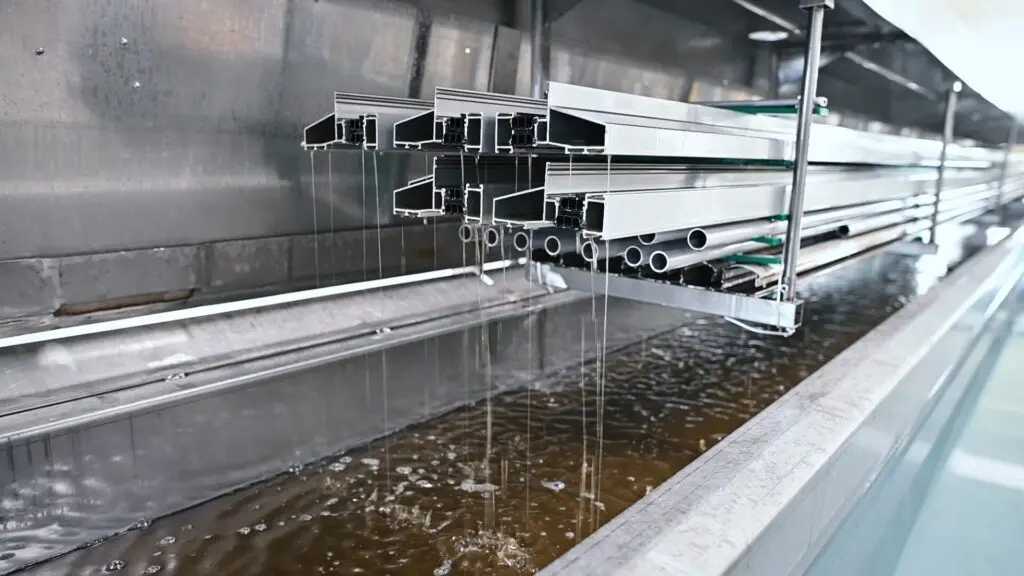
Aluminum stripping is one of the most delicate applications. Aluminum is lightweight and naturally corrosion-resistant due to its oxide layer, but it can be easily damaged by overly aggressive treatments.
Aluminum paint removal must take into account:
- Component thickness
- Type of coating (liquid or powder)
- Surface finish and dimensional tolerances
Excessive mechanical action may cause micro-abrasions or dimensional alterations. For this reason, in industrial environments, chemical aluminum paint stripping is often the most controlled solution. It works by breaking the bond between coating and substrate without applying direct mechanical stress.
Steel and Other Metals Stripping
When dealing with steel, iron, or structural alloys, metal stripping is generally more tolerant than aluminum, but not necessarily simpler. Epoxy coatings, thermoset polyesters, and multi-layer industrial systems are engineered to withstand chemical and mechanical stress.
Chemical metal stripping is now the most widely used industrial method because it allows large quantities of components to be treated uniformly. It is particularly suitable when it is necessary to:
- Recover hooks and coating racks.
- Remove repeated coating buildup.
- Prepare parts for re-coating.
Chemical metal paint removal can reach complex geometries, cavities, and threaded areas where mechanical methods may be inefficient or too invasive.
Alloy Wheel and Rim Stripping
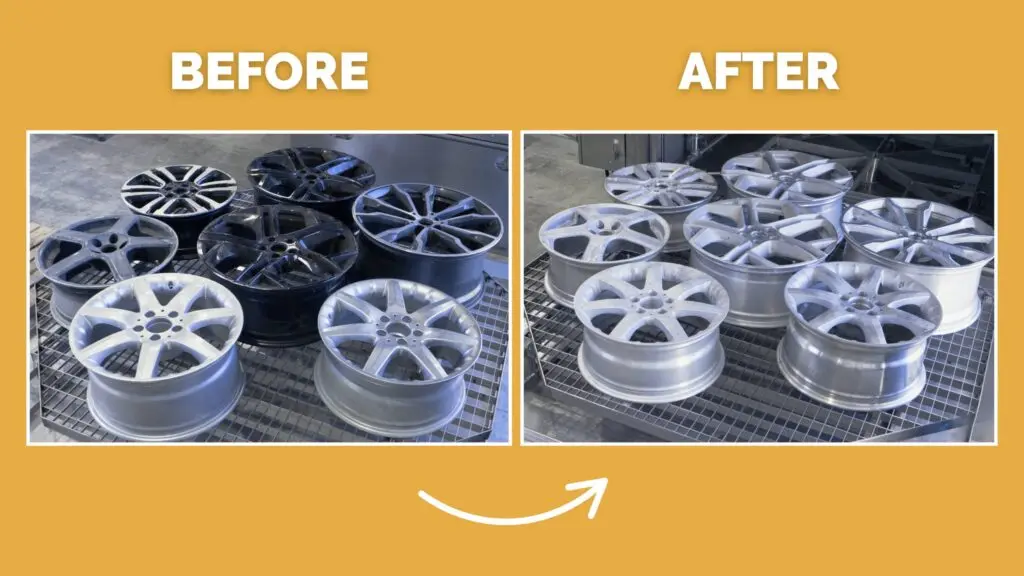
Alloy wheel stripping is a typical application in the automotive and refurbishment sectors. Alloy wheels are often coated with high-resistance powder coatings designed to withstand weather exposure, road salt, and mechanical stress.
Processes such as alloy wheel paint stripping or rim paint stripping must ensure complete coating removal without compromising the structural integrity of the wheel. In professional environments, the goal is to restore the surface uniformly to ensure a high-quality refinishing cycle.
Industrial Coating and Coatings Removal
Coating stripping applies to industrial components, metal structures, and equipment subjected to repeated coating cycles. Progressive paint buildup can alter tolerances, block threads, and reduce overall product quality.
In this context, stripping is part of process management. Proper coatings removal allows companies to:
- Extend the service life of production equipment.
- Reduce waste and rejects.
- Maintain consistent quality standards.
Benefits of Metal Paint Stripping
Removing paint from metal surfaces delivers measurable advantages:
- Aesthetic and functional restoration.
- Optimal surface preparation for re-coating.
- Recovery of production components.
- Reduced replacement costs.
- Extended material life cycle.
What Is the Best Method to Remove Paint from Metal?
There is no universal answer. The best method depends on the metal, the coating system, production volumes, and required quality standards. In structured industrial environments, chemical metal stripping is often the most efficient and controllable solution, especially when integrated into a dedicated system designed for safety, repeatability, and environmental compliance.

